
 WELCOME
Being Designerly 134 is the last one of 2025. A recurring theme in this issue: Speed isn’t the problem. Missing judgment is.
1️⃣ McDonald’s AI ad AI worked. Taste didn’t. Can we? replaced should we?
2️⃣ Google’s Year in Search Real curiosity beats confident assumptions every time.
3️⃣ A Google AI security engineer’s warning Convenience without restraint = quiet risk.
4️⃣ The most underrated design skill for 2025 Seeing ideas faster > polishing them longer.
5️⃣ The $117T world economy, visualized Clarity comes from framing, not more data.
6️⃣ 40 tiny UX mistakes that ruined trust Small misses compound. Users always notice.
7️⃣ The most-read UX articles of the year Less process. More judgment. More people-first thinking.
8️⃣ A font change that sparked an inclusion debate Design choices are never neutral.
Different stories. Same pattern:
When humans step out early, defaults start making decisions.
This issue of Being Designerly is about reclaiming that pause - before speed, novelty, or AI make the call for us.

 FEATURE
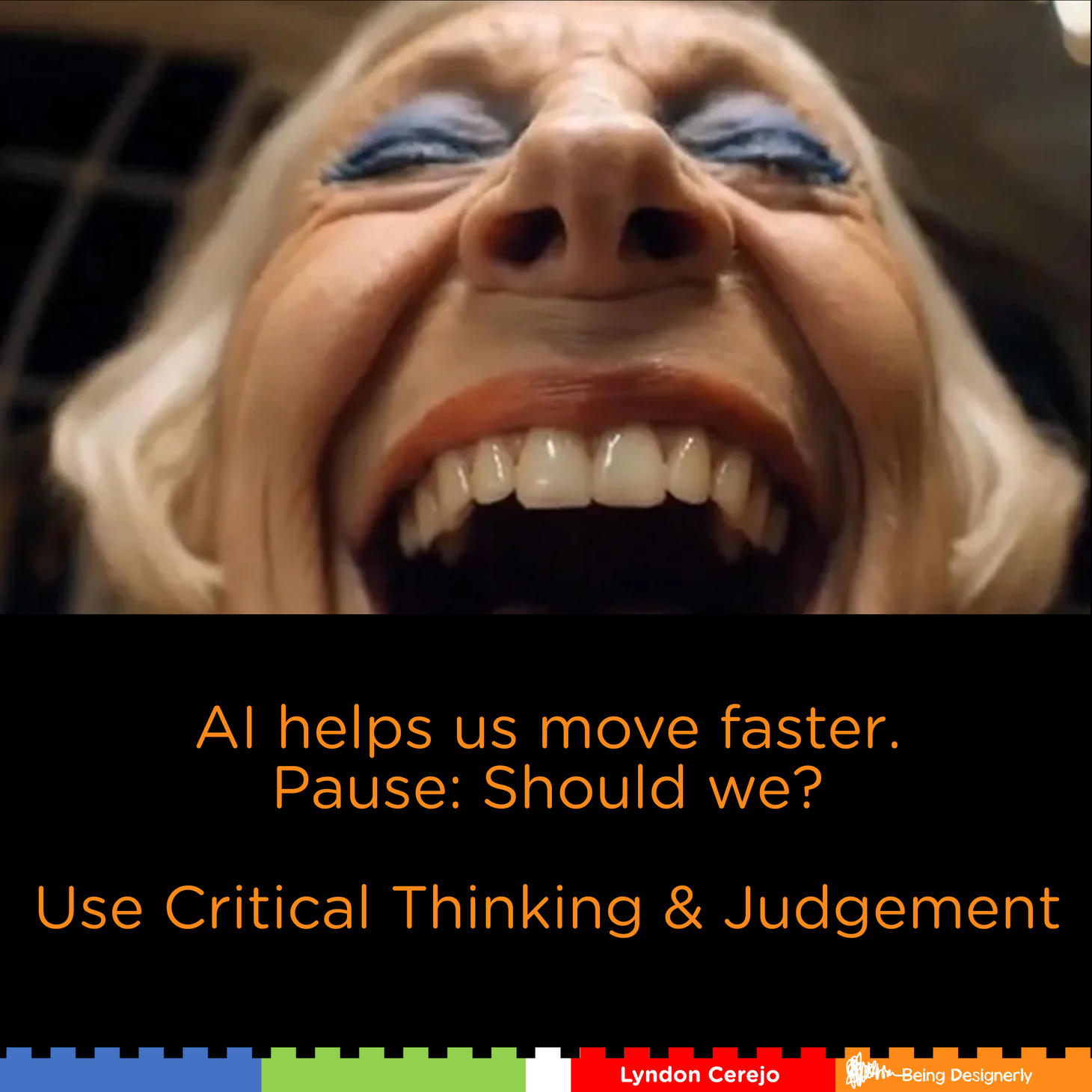
McDonald's AI Ad Controversy
The McDonald’s AI ad didn’t fail because of AI. It failed because no one slowed it down.
McDonald's Netherlands recently released an AI-generated ad and quickly pulled it because of the backlash. E.g.: “If they were going for creepy, depressing, deeply unfunny, clumsily shot, poorly edited, and inauthentic - nailed it!”
Technically? It worked - kinda. Culturally? It felt empty, and Grinchy.
That gap is where critical thinking lives. AI makes it easy to ask: “Can we generate this?”
Human judgement asks: “Should we publish it?”
Human-IS-the-loop doesn’t mean approving the final output. It means shaping intent before anything is generated, and critically evaluating outputs and iterations.
Because when humans step out too early, we stop making choices and start accepting defaults.
Just because we can move faster (or add novelty) doesn’t mean we should.
That pause to allow judgment, taste, restraint play a role is still a human skill.
More: McDonald's Netherlands pulls AI Christmas ad after backlash: https://www.bbc.com/news/articles/czdgrnvp082o
All Trades Co. Satire Response: https://adage.com/creativity/aa-all-trades-co-mcdonalds-ai-ad/
FAIR - Human Loop for Responsible AI: https://go.cerejo.com/m05pyd
linkedin.com
 CURIOSITY
Google's Year in Search 2025
It's that time of year - when google shares how we used their search this year. They also have a new special section on how the US searched for AI.
trends.withgoogle.com
 CRITICAL THINKING

I Work at Google in AI Security: Things I Would Never Tell Chatbots
Harsh Varshney, a Google AI security engineer, says it’s important to use AI tools safely because of privacy risks and possible data misuse. He shares four easy habits to protect your personal and work data when using AI chatbots.
businessinsider.com
 VISUAL COMMUNICATION

The Most Underrated Design Skill in 2025: How To See Your Ideas Faster
Yanko Design’s podcast Design Mindset features Reid Schlegel, a Design Director and teacher, talking about how important it is to quickly show ideas in design. Reid says creativity grows by sharing and improving rough ideas fast, not waiting for perfect ones.
yankodesign.com
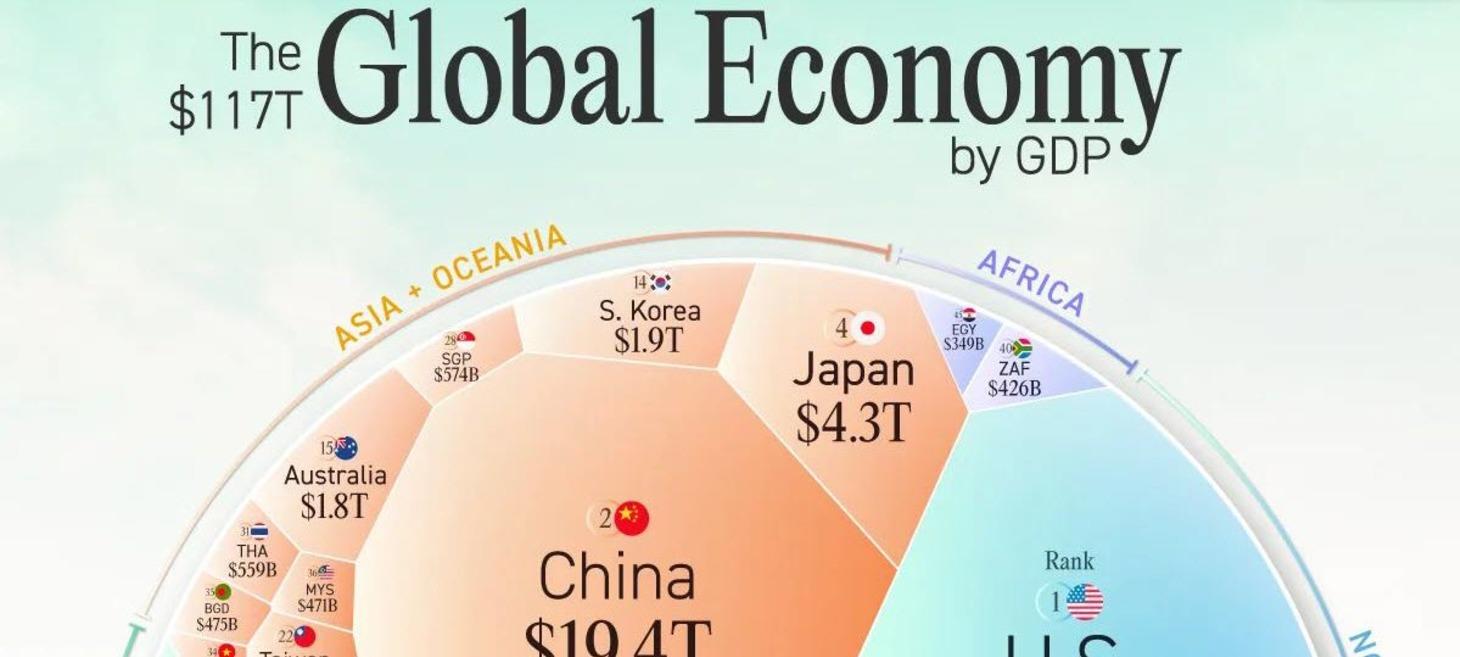
The $117 Trillion World Economy in One Giant Visualization
This visualization shows the state of the world economy in 2025, based on projections from the IMF’s latest World Economic Outlook. America’s $30.6 trillion economy is greater than China, Germany, and Japan combined.
visualcapitalist.com
 UX
UX

40 Times Designers Messed Up In A Minor Way, But It Ruined User Experience In A Big Way
There are a bunch of digital UX items on the list, along with real life experience issues. 7 gets to me. Every. Single. Time
boredpanda.com
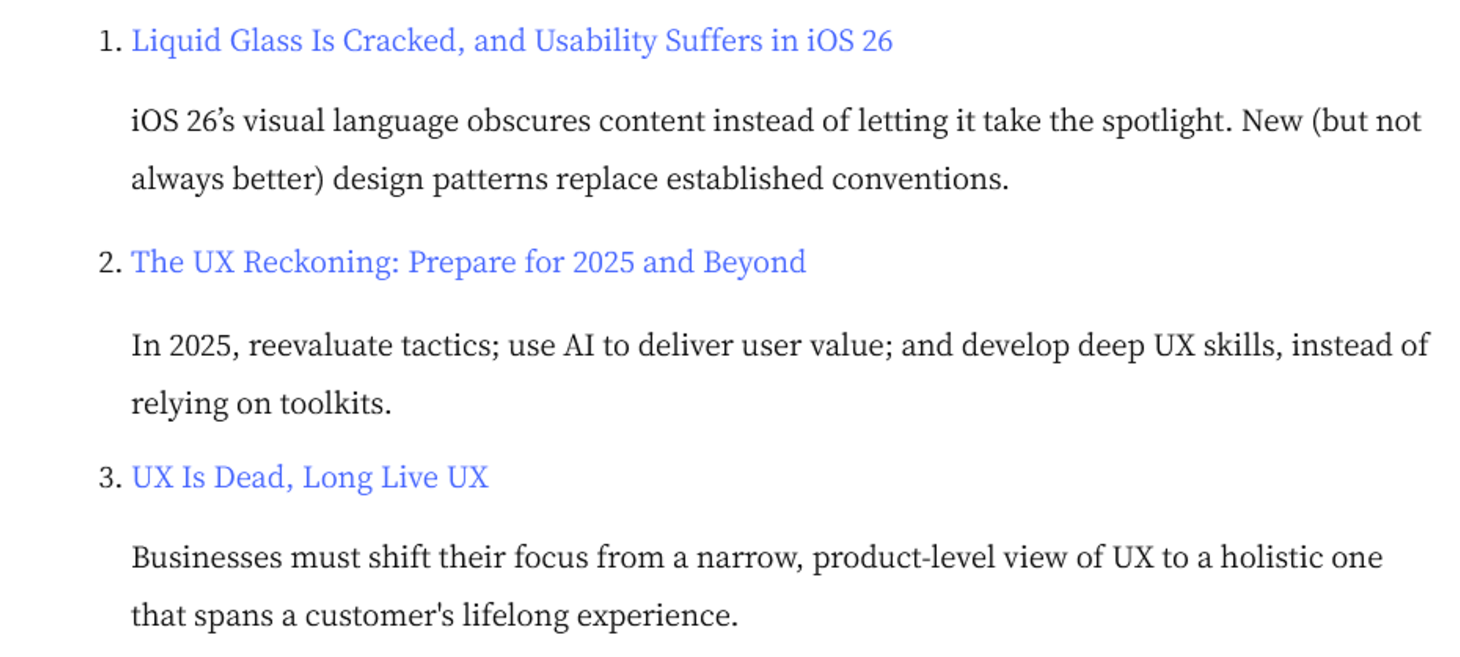
Top 10 UX Articles of 2025
The top read 10 user-experience articles published by NNG in 2025, plus 5 bonus ones from 2024 that got traction this year.
nngroup.com
 INCLUSIVE

Goodbye Calibri, Hello Times New Roman
Secretary of State Marco Rubio reversed the State Department's official use of Calibri, replacing it with Times New Roman for official papers. The use of Calibri was meant to aid readers with disabilities, such as dyslexia, as well as those using screen readers and other assistive technologies. Times New Roman was the department's official typeface for nearly 20 years until the 2023 Calibri change. Prior to 2004, the State Department used Courier New.
axios.com
